- [email protected]
- +86 166 2512 2612

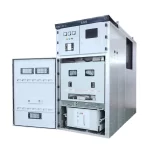
Ⅰ. Product Introduction
1.Executive Standards
International Standards: IEC 60076-1~5
2.Voltage Levels
①High-voltage side: Ranging from 0.4kV to 35kV ( 10kV, 20kV, 35kV). For extra-large rectifier transformers used in electrolysis, the voltage can reach 110kV~220kV.
②Low-voltage side: Depending on application scenarios, the common range is 600V~1500V (in the electrolysis industry), and in the electrostatic precipitator field, the DC voltage can reach 60kV~90kV.
3.Voltage Regulation Methods
On-load voltage regulation: Realizes stepless regulation through a 35-level continuous fine-coarse voltage regulating switch, suitable for scenarios requiring frequent voltage regulation ( electrolytic aluminum production).
4.Off-circuit voltage regulation: Manual adjustment via a tap changer, suitable for fixed load requirements ( urban rail transit).
5.High-voltage Tap Range
①Conventional range: ±2×2.5% (a total of 5 taps), applicable to scenarios where the grid voltage fluctuates by ±5%.
②Special design: Some transformers for electrolysis can be extended to ±10% to meet the needs of extreme voltage fluctuations.
6.Rated Capacity
①Small capacity: 30kVA~2500kVA (used in electroplating, electrical machining fields).
②Large capacity: 16000kVA~180000kVA (specialized products for electrolytic aluminum from enterprises such as TBEA).
7.Frequency: 50Hz or 60Hz
8.Phase Number
①Three-phase: Mainstream configuration, suitable for high-power industrial applications ( electrolysis, traction).
②Single-phase: Used in low-power scenarios ( electrostatic precipitators, small electroplating equipment).
9.Connection Groups
①Common types: Dyn11 (strong harmonic suppression capability), Yyn0 (neutral point grounded), Dy5 (phase-shifted rectification).
②Special design: Multi-winding phase-shifted connection (±7.5° phase shift), which can form a 24-pulse rectifier system.
10.Impedance Voltage
①Conventional range: 5%~10% (adjusted according to applications). Transformers for electrolysis are usually designed with 7%~8% to limit short-circuit current.
②High-impedance design: In the electrostatic precipitator field, the impedance can reach more than 12%, replacing external reactors.
Ⅰ. Production Process
1.The production process of rectifier transformers is a core link to ensure their adaptation to nonlinear rectifier loads, suppression of harmonic interference, and guarantee of long-term stable operation. It covers the entire process of precision control from raw material selection to finished product testing. The following is a detailed description of its main production processes:
①Silicon Steel Sheet Cutting:
CNC transverse shearing lines are used for precise cutting to ensure the sheet size deviation is ≤±0.1mm and the cutting burr is ≤0.02mm (to avoid increased eddy current loss).
②Iron Core Lamination:
The “non-laminated upper yoke” process is adopted (first laminating the iron core column, then inserting the upper yoke) to reduce lamination stress; the lamination factor is controlled between 0.96~0.97 (to improve magnetic conductivity).Insulating screws or binding tapes are used for fastening, with uniform fastening force (axial compression ≤1%) to avoid iron core vibration noise (no-load noise ≤65dB).
③Iron Core Grounding Treatment:
Single-point grounding (a grounding plate is led out from the bottom of the iron core) to prevent caused by multi-point grounding; the grounding resistance is ≤1Ω.
④Iron Core Manufacturing Process:
The iron core is the core of the magnetic circuit, and the process focuses on reducing iron loss, minimizing noise, and ensuring structural strength.
⑤Winding Manufacturing Process:
The winding is the core of the circuit and needs to meet the requirements of voltage resistance, short-circuit resistance, low loss, and harmonic adaptation:Dry-type transformers: The windings are cast with epoxy resin (vacuum degassing ≤-0.095MPa, curing temperature 130℃×8h) to ensure no bubbles in the insulation layer (bubble diameter ≤0.5mm).Oil-immersed transformers: The windings undergo pre-drying (105℃×48h, vacuum degree ≤10Pa), and after dipping in paint, they are dried (120℃×24h) to improve the integrity of the insulation.
⑥Coil Design and Winding:
According to the phase-shifted rectification requirements (e.g., 12/24 pulses), multi-winding segmented winding is adopted to ensure the phase difference accuracy of each winding is ≤±0.5°.The low-voltage winding (rectifier side) is wound using the foil method (copper foil thickness 0.3~0.5mm) to improve heat dissipation efficiency; the high-voltage winding is wound using the continuous or method to enhance insulation strength.
| Rated Capacity | H.V. | L.V. | Connection Symbol | No-load loss(kw) | On-load loss(kw) | Short circuit impedance | ||
|---|---|---|---|---|---|---|---|---|
| S11 | S13 | S11 | S13 | S11 | ||||
| 50 | 35
38.5 |
0.4 | Dyn11
Yyn0 |
0.16 | 0.112 | 1.20/1.14 | 1.20/1.14 | 6.5 |
| 100 | 0.23 | 0.161 | 2.01/1.91 | 2.01/1.91 | ||||
| 125 | 0.27 | 0.189 | 2.37/2.26 | 2.37/2.26 | ||||
| 160 | 0.28 | 0.196 | 2.82/2.68 | 2.82/2.68 | ||||
| 200 | 0.34 | 0.238 | 3.32/3.16 | 3.32/3.16 | ||||
| 250 | 0.4 | 0.28 | 3.95/3.76 | 3.95/3.76 | ||||
| 315 | 0.48 | 0.336 | 4.75/4.53 | 4.75/4.53 | ||||
| 400 | 0.58 | 0.406 | 5.74/5.47 | 5.74/5.47 | ||||
| 500 | 0.68 | 0.476 | 6.91/6.58 | 6.91/6.58 | ||||
| 630 | 0.83 | 0.581 | 7.86 | 7.86 | ||||
| 800 | 0.98 | 0.686 | 9.4 | 9.4 | ||||
| 1000 | 1.15 | 0.805 | 11.5 | 11.5 | ||||
| 1250 | 1.4 | 0.98 | 13.9 | 13.9 | ||||
| 1600 | 1.69 | 1.183 | 16.6 | 16.6 | ||||
| 2000 | 1.99 | 1.393 | 19.7 | 19.7 | ||||
| 2500 | 2.36 | 1.652 | 23.2 | 23.2 | ||||

Professional manufacturer of aerial work platforms and hydraulic lifts. Specializing in OEM customization and factory-direct solutions.
Sector # 48, 123 Street, miosya road VIC 28, Australia.
+8615800125621
Subscribe to our Newsletter to be updated. We promise not to spam.
Copyright © 2025 GRADINMachinery. All Rights Reserved